



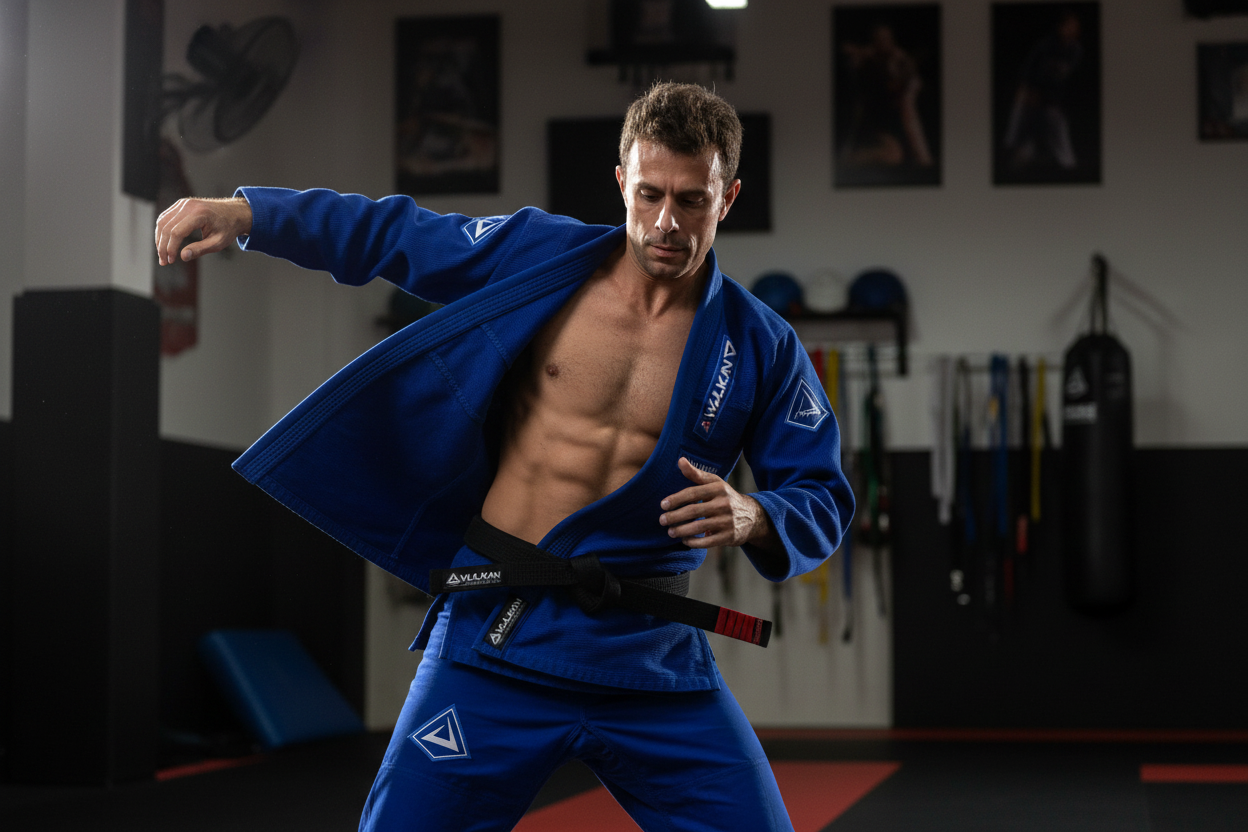

Walk into any Brazilian Jiu-Jitsu academy and you'll quickly notice that not all gis are created equal. While they may look similar at first glance, experienced practitioners know that differences in fabric, construction, stitching, fit, and finishing can dramatically affect comfort, durability, and performance on the mats.
One of the most common questions among beginners and seasoned athletes alike is:
"Why does one gi cost $80 while another costs over $200?"
The answer goes far beyond the logo on the sleeve.
A premium Brazilian Jiu-Jitsu gi is the result of countless design decisions — from the type of cotton used to the weave of the fabric, the reinforcement at stress points, the collar construction, and even how the gi is washed before it reaches the customer.
After more than two decades manufacturing Jiu-Jitsu gis in Brazil, we've seen the sport evolve from heavy, stiff uniforms inspired by traditional judo to lightweight, competition-ready gis designed for modern athletes. Along the way, we've learned that the best gi isn't simply the lightest or the most expensive — it's the one that combines durability, comfort, mobility, and consistency over years of training.
This guide explains what truly makes a premium BJJ gi.
Understanding BJJ Gi Fabrics
The fabric is the foundation of every gi. It influences durability, weight, breathability, comfort, and even how your opponent grips your uniform.
Over the years, manufacturers have developed several fabric constructions, each with its own characteristics.
Single Weave
Single weave was one of the earliest fabrics used in Brazilian Jiu-Jitsu. It is lightweight, affordable, and comfortable for beginners.
Advantages:
- Light and breathable
- Budget-friendly
- Comfortable in warm climates
Disadvantages:
- Less durable for heavy training
- Can wear out faster with daily use
Gold Weave
Gold weave became popular because it offered a balance between weight and durability. The fabric uses a denser pattern than single weave while remaining more comfortable than traditional heavyweight gis.
For many years, gold weave was considered the premium standard.
Advantages:
- Excellent durability
- Softer after repeated washing
- Great balance between comfort and longevity
Disadvantages:
- Heavier than modern competition fabrics
- Longer drying time
Pearl Weave
Today, pearl weave is the most common premium fabric found in high-quality BJJ gis.
Rather than referring to the cotton itself, "pearl weave" describes the way threads are interwoven, creating a textured surface that resembles small pearls. This construction provides an excellent balance between strength and weight, making it the preferred choice for both everyday training and IBJJF competition.
Advantages:
- Excellent strength-to-weight ratio
- Comfortable after break-in
- Highly durable
- Competition approved

Close-up of the Pearl Weave fabric used in the Vulkan Pro Light Gi. The raised weave pattern creates an excellent balance of strength, breathability, and weight — making Pearl Weave the preferred fabric for many premium Brazilian Jiu-Jitsu gis.
Honeycomb Weave
Honeycomb weave represented one of the biggest innovations in lightweight BJJ gis. Instead of relying on thicker fabric for durability, the honeycomb structure distributes strength through its geometric pattern — reducing overall weight while maintaining excellent resistance.
In 2009, Vulkan introduced the Ultra Light Gi, featuring a honeycomb weave jacket that helped redefine expectations for lightweight gis. At the time, most practitioners associated lighter uniforms with lower durability. The Ultra Light Gi demonstrated that thoughtful engineering could significantly reduce weight without sacrificing performance.
Over the years, the term "Ultra Light" became widely used throughout the industry to describe lightweight gis from many different brands. Today, not every gi marketed as "ultra light" is equally lightweight — the actual weight depends on fabric construction, cotton quality, reinforcements, and overall design, not simply the marketing name.
Why Lightweight Doesn't Mean Lower Quality
One of the biggest misconceptions in Brazilian Jiu-Jitsu is that heavier means better.
In reality, designing a lightweight gi that remains durable is often far more difficult than producing a heavier one. Reducing weight requires careful engineering — manufacturers must reinforce high-stress areas, optimize stitching, and select fabrics that maintain their integrity through years of training and washing.
For athletes who travel, compete frequently, or train in warm climates, a well-designed lightweight gi offers significant advantages:
- Greater mobility
- Faster drying after washing
- Less weight during competition weigh-ins
- Increased comfort during long training sessions
The quality of a gi should never be judged by weight alone.
Cotton Quality Matters
Not all cotton is the same. The quality of the fibers directly affects softness, durability, breathability, and how well the fabric withstands repeated washing.
Premium cotton generally features longer fibers, producing stronger yarns with fewer loose ends. This results in a smoother fabric that pills less over time while maintaining its structural integrity. Combined with high-quality weaving, premium cotton allows a gi to remain comfortable through hundreds of training sessions.
Construction Makes the Difference
Many of the most important quality features of a premium gi are nearly invisible — until the gi starts to fall apart.
Look closely and you'll often find:
- Reinforced stress points
- Multiple rows of stitching
- Triple-stitched seams
- Reinforced knee panels
- Strong belt loops
- Durable ripstop or reinforced cotton pants
- EVA foam collars that resist water absorption and maintain their shape
These details determine how well a gi performs after years of rolling — not just during the first few months.
Why Pre-Shrunk Isn't the Whole Story
Many manufacturers describe their gis as "pre-shrunk." While pre-shrinking helps reduce future shrinkage, the finishing process is equally important.
Some premium manufacturers go a step further by washing the garment before it reaches the customer. This additional process helps stabilize the fabric, remove excess dye, soften the material, and minimize future shrinkage.
Even so, no cotton gi is completely immune to shrinking. Proper care — including washing in cold water and allowing the gi to air dry — remains the best way to preserve fit and maximize the life of your uniform.
(For a complete guide, see our article on How to Wash and Care for Your BJJ Gi.)
Is Every "Ultra Light" Gi Actually Ultra Light?
Today, you'll find dozens of brands offering "Ultra Light" gis — but the name alone doesn't tell the full story.
Two gis labeled "Ultra Light" can differ significantly in total weight depending on:
- Fabric weave
- Cotton quality
- Reinforcement methods
- Collar construction
- Pants material
- Overall pattern design
Choosing a lightweight gi should always involve looking beyond the product name and understanding how the uniform is actually constructed.
(In our next guide, we'll take a deeper look at What Does "Ultra Light Gi" Really Mean?)
Final Thoughts
A premium Brazilian Jiu-Jitsu gi isn't defined by a single feature. It's the combination of fabric, engineering, construction, finishing, and years of manufacturing experience that ultimately determines how a gi performs.
Whether you're purchasing your first gi or replacing one after years of training, understanding these details will help you make a more informed decision — one that fits your training style, goals, and budget.
The best gi is the one that allows you to train consistently, move comfortably, and perform with confidence every time you step onto the mats.

Leave a comment (all fields required)